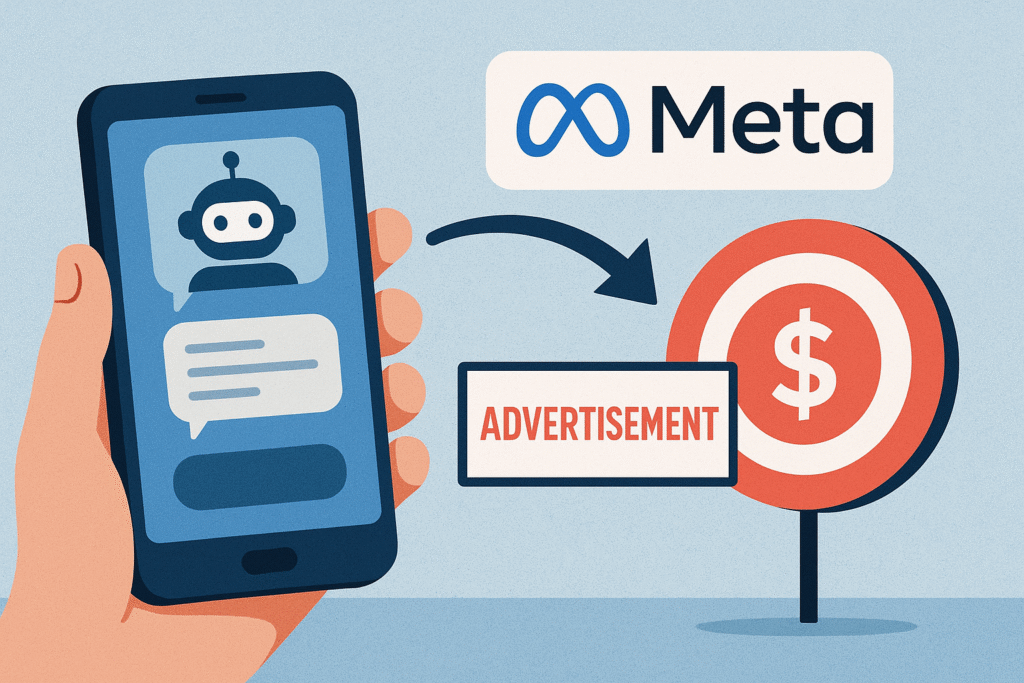

Meta Platforms has unveiled a new advertising strategy that could significantly reshape how users experience its apps. Starting on December 16, 2025, the company will begin using conversations from its AI chatbot, Meta AI, to personalize advertisements and content recommendations. This means that the questions, prompts, and interactions users have with Meta’s AI will become another data signal for tailoring ads across Facebook, Instagram, and potentially other platforms. For example, if someone chats with Meta AI about hiking trails or vacation destinations, they might later notice ads for hiking gear or travel packages appearing in their feed.
According to the company, this system is meant to refine personalization by relying not only on indirect signals such as likes, clicks, or browsing behavior but also on explicit interests revealed in conversations. Meta has long depended on advertising as its main revenue source, and this move underscores the company’s push to leverage the popularity of its AI assistant, which it claims already engages more than a billion monthly active users. By tapping into this conversational data, Meta can more accurately align ads with a user’s immediate needs and curiosities, making advertising both more targeted and more profitable.
Meta insists that there will be boundaries on how these chats are used. The company has stated that sensitive topics—including religion, health, sexual orientation, race, political views, or union membership—will not be factored into ad targeting. Furthermore, the change will only apply to interactions that occur after December 16; earlier chats will not be retroactively mined for ad signals. However, the company also confirmed that users will not be able to opt out of this policy if they choose to use the AI assistant. This lack of an opt-out option has already raised concerns among privacy advocates who argue that conversations should not be automatically funneled into an advertising pipeline without explicit user consent.
Interestingly, the rollout will not be global. Meta’s plan excludes regions with stricter privacy protections, including the European Union, the United Kingdom, and South Korea. These exemptions highlight how regulatory pressures are influencing how tech giants design and apply their data policies. In regions like the EU, privacy watchdogs are already scrutinizing Meta for its handling of personal information, and expanding ad targeting through AI chats could have sparked legal challenges under frameworks like the GDPR.
Still, for markets where the policy applies, the implications are significant. On one hand, it could lead to a more seamless user experience, with ads and recommendations that feel timely and relevant. On the other hand, it raises fresh concerns about the erosion of boundaries between private conversations and corporate surveillance. Critics warn that even if Meta excludes sensitive topics, the definitions of what qualifies as “sensitive” remain vague, and users might become more hesitant to engage in open, natural conversations with AI if they fear those words could later shape the ads they see.
Ultimately, Meta’s decision reflects a broader trend in the tech industry: as AI assistants become more deeply woven into digital life, the conversations we have with them are increasingly being treated as valuable data assets. Whether users embrace this new form of personalization or resist it as a step too far will likely determine how successful—and how controversial—this strategy becomes.