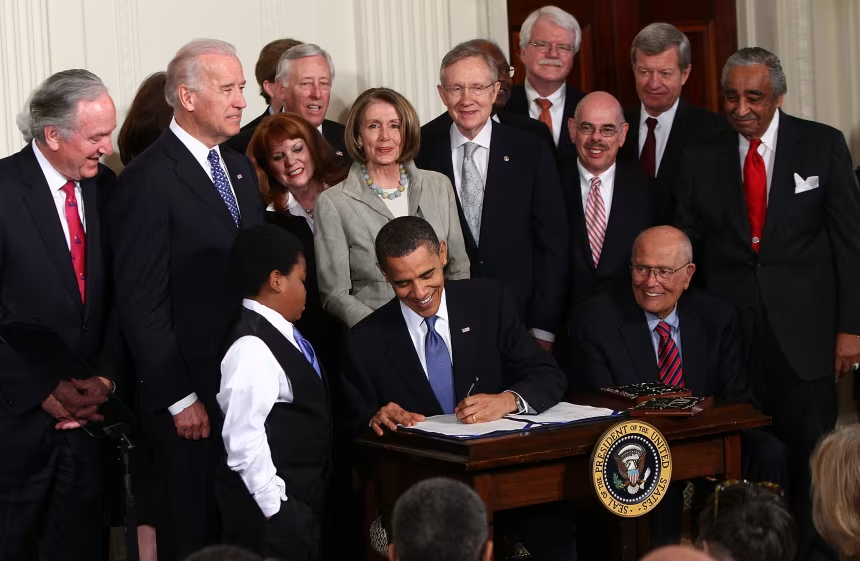
A true measure of a law’s transformative power is whether it endures — not just on paper, but in the everyday lives of citizens and the heat of political conflict — long after the president who signed it has faded from the political stage. Nation-changing legislation doesn’t simply solve problems in the moment; it reshapes the country’s identity, structure, and future. Its relevance lingers through generations, shaping debates, defining values, and standing as a reminder of the vision — and battles — that brought it into existence.
Take, for instance, the legacy of Franklin D. Roosevelt’s New Deal. Passed during the depths of the Great Depression, it was a bold, expansive response to unprecedented economic collapse. Among its many components, the Social Security Act of 1935 has had the most lasting and visible impact. Nearly 90 years later, Social Security continues to provide financial stability to millions of Americans — from retirees to disabled workers to surviving family members. It has become so embedded in the fabric of American life that any attempt to alter or cut it sparks fierce debate. The program is no longer seen as a temporary fix, but as a foundational promise between government and citizen — one that still defines the social safety net today.
Similarly, the Voting Rights Act of 1965, championed by President Lyndon B. Johnson at the height of the civil rights movement, represents another pivotal moment in American legislative history. Crafted to dismantle systemic barriers that had long prevented Black Americans and other minorities from voting, the law marked a turning point in the nation’s pursuit of racial justice and democratic inclusion. Though key provisions have been weakened in recent years — particularly by Supreme Court rulings that rolled back federal oversight — the law remains a powerful symbol of the fight for equal rights. Six decades after its passage, it continues to spark intense political and legal battles, especially around issues like voter ID laws, gerrymandering, and access to polling places.
Both laws, in their own way, have stood the test of time — not only by remaining in effect, but by continuing to influence the national conversation. They are frequently invoked by politicians, scrutinized in courtrooms, and fiercely defended or opposed depending on the political moment. In doing so, they demonstrate what it means for legislation to outlive its creator and become part of the country’s DNA.
When a law becomes central to the way Americans live — and central to how they fight over what America should be — it moves beyond policy and into history. It becomes a touchstone, a legacy, and sometimes, a battlefield. These laws remind us that the work of shaping a nation doesn’t end when a bill is signed. That’s often when the real struggle begins.