Meta plans to leverage your chats with its AI chatbot to target you with advertisements.

Meta plans to leverage your chats with its AI chatbot to target you with advertisements.

Meta Platforms has unveiled a new advertising strategy that could significantly reshape how users experience its apps. Starting on December 16, 2025, the company will begin using conversations from its AI chatbot, Meta AI, to personalize advertisements and content recommendations. This means that the questions, prompts, and interactions users have with Meta’s AI will become another data signal for tailoring ads across Facebook, Instagram, and potentially other platforms. For example, if someone chats with Meta AI about hiking trails or vacation destinations, they might later notice ads for hiking gear or travel packages appearing in their feed.

According to the company, this system is meant to refine personalization by relying not only on indirect signals such as likes, clicks, or browsing behavior but also on explicit interests revealed in conversations. Meta has long depended on advertising as its main revenue source, and this move underscores the company’s push to leverage the popularity of its AI assistant, which it claims already engages more than a billion monthly active users. By tapping into this conversational data, Meta can more accurately align ads with a user’s immediate needs and curiosities, making advertising both more targeted and more profitable.

Meta insists that there will be boundaries on how these chats are used. The company has stated that sensitive topics—including religion, health, sexual orientation, race, political views, or union membership—will not be factored into ad targeting. Furthermore, the change will only apply to interactions that occur after December 16; earlier chats will not be retroactively mined for ad signals. However, the company also confirmed that users will not be able to opt out of this policy if they choose to use the AI assistant. This lack of an opt-out option has already raised concerns among privacy advocates who argue that conversations should not be automatically funneled into an advertising pipeline without explicit user consent.

Interestingly, the rollout will not be global. Meta’s plan excludes regions with stricter privacy protections, including the European Union, the United Kingdom, and South Korea. These exemptions highlight how regulatory pressures are influencing how tech giants design and apply their data policies. In regions like the EU, privacy watchdogs are already scrutinizing Meta for its handling of personal information, and expanding ad targeting through AI chats could have sparked legal challenges under frameworks like the GDPR.

Still, for markets where the policy applies, the implications are significant. On one hand, it could lead to a more seamless user experience, with ads and recommendations that feel timely and relevant. On the other hand, it raises fresh concerns about the erosion of boundaries between private conversations and corporate surveillance. Critics warn that even if Meta excludes sensitive topics, the definitions of what qualifies as “sensitive” remain vague, and users might become more hesitant to engage in open, natural conversations with AI if they fear those words could later shape the ads they see.

Ultimately, Meta’s decision reflects a broader trend in the tech industry: as AI assistants become more deeply woven into digital life, the conversations we have with them are increasingly being treated as valuable data assets. Whether users embrace this new form of personalization or resist it as a step too far will likely determine how successful—and how controversial—this strategy becomes.

The Halloween industry is facing serious setbacks because of Trump’s tariffs.

The Halloween industry is facing serious setbacks because of Trump’s tariffs.

The Halloween industry, known for its creativity and seasonal excitement, is facing a harsh and unexpected challenge. Thanks to the tariffs introduced under the Trump administration’s trade policies, many businesses that bring spooky decorations, costumes, and party supplies to consumers are now struggling to stay afloat. What once was a booming seasonal market is now grappling with increased costs, disrupted supply chains, and uncertain futures.

Tariffs — essentially taxes on imported goods — were ramped up on many products coming from China, a primary manufacturing hub for Halloween merchandise. From intricately designed masks and animatronic props to plastic pumpkins and faux cobwebs, a significant portion of these items are made overseas due to lower production costs and specialized manufacturing expertise. However, when tariffs suddenly added extra fees on these imports, the cost of bringing them to U.S. shelves surged dramatically.

Small and medium-sized businesses in particular have felt the brunt of this economic squeeze. Many companies operate on razor-thin profit margins during Halloween season, relying on affordable imports to offer customers a wide selection at reasonable prices. With the tariffs inflating costs, retailers have faced a difficult choice: absorb the higher expenses and reduce profits or raise prices and risk losing customers.

One such example is a Santa Cruz-based horror merchandise warehouse filled with masks, movie props, and themed games. The owner describes the tariffs as a “real-life cash bleed,” highlighting how the added financial strain has cut deeply into his company’s revenues. His products, once competitively priced and accessible, now carry higher price tags that deter some buyers, reducing overall sales.

The ripple effects extend beyond just pricing. Tariffs have disrupted the delicate supply chains that many Halloween businesses rely on. Long-established relationships with overseas manufacturers have been strained or severed, forcing companies to seek alternative suppliers — often with higher costs or compromised quality. Some businesses have tried to shift production domestically, but replicating the specialized skills and economies of scale found in foreign factories has proven challenging.

Moreover, the timing couldn’t be worse. Halloween is a highly seasonal market, with a short but intense sales period in the months leading up to October 31st. Any disruption or cost increase during this window can have outsized effects on annual revenues and sustainability.

Industry analysts warn that continued tariffs may permanently reshape the Halloween market. Some companies may reduce the variety of products offered, focusing only on best-sellers or cheaper items. Others might scale back operations or even exit the business altogether, shrinking consumer choice and creativity in the industry.

On a broader level, this scenario exemplifies how trade policies, designed to protect domestic industries or reshape global economics, can sometimes have unintended consequences. While tariffs aim to level the playing field, they can also hobble industries reliant on global supply chains — including seasonal and niche markets like Halloween.

In the end, the spooky fun of Halloween masks and haunted house props masks a real economic challenge. Behind every costume and decoration is a complex story of manufacturing, trade, and business survival — one now shadowed by the toll of tariffs.

Sunday comeback shows spirit, but exposes US Ryder Cup flaws

Sunday comeback shows spirit, but exposes US Ryder Cup flaws

The Ryder Cup has always been a contest that stirs emotions, and this year’s edition was no different. Team USA entered the final day staring at what seemed like an impossible task—overturning a 12–5 deficit against a confident European squad. What followed on Sunday was a display of grit and pride, as the Americans launched a fierce fightback in the singles matches. Several players dug deep, claiming vital points and sparking murmurs of one of the greatest comebacks in golf history. Yet as the dust settled, the final scoreboard told the real story: Europe held firm to secure a 15–13 victory.

For the U.S., the late surge was commendable but ultimately cosmetic. Their performance throughout the earlier sessions had left them with too much ground to cover. Europe’s dominance in foursomes and four-ball gave them a cushion that even a near-perfect Sunday from the Americans could not erase. It was a pattern familiar to Ryder Cup watchers: a U.S. team brimming with talent but falling behind early, only to mount a desperate rally when the margin had already become insurmountable.

One of the key issues lay in strategy. Captain Keegan Bradley, in his first stint leading the team, admitted afterward that he may have made mistakes in course setup and pairings. The Marco Simone course played to Europe’s strengths, with tighter fairways and punishing roughs that neutralized the Americans’ distance advantage. In hindsight, Bradley suggested he “would have set the course up a little differently,” a quiet acknowledgement that tactical missteps played a role in his team’s struggles.

Player performances were another sore point. Scottie Scheffler, the world’s number one and centerpiece of the U.S. lineup, endured a historically rough Ryder Cup. He became the first American ever to lose a match in each of the first four sessions, visibly shaken at times by the pressure. Though he salvaged pride with a singles win on Sunday, his early struggles epitomized the inconsistency that plagued the U.S. roster. Other stars failed to fire when needed, leaving too much responsibility on a handful of players who eventually led the comeback.

In contrast, Europe’s balance and consistency stood out. From Rory McIlroy’s leadership to the contributions of emerging stars, the hosts played as a unit from start to finish. They built momentum early, sustained it, and never allowed the Americans to feel comfortable. Their ability to manage pressure and thrive in team formats once again underlined why Europe has dominated the Ryder Cup in recent decades, especially on home soil.

The American fightback deserves credit, and it showed that the team has the resilience and talent to compete with the best. But it also laid bare systemic problems that have haunted U.S. squads for years—an inability to start strong, questionable strategic planning, and an overreliance on individual brilliance rather than cohesive teamwork. Until those flaws are addressed, spirited Sunday rallies will continue to be memorable footnotes rather than match-winning turnarounds.

For now, Europe celebrates another triumph, while the U.S. is left to reflect on a campaign that ended with pride restored but ultimate victory still out of reach.

The fight against censorship that made Hair a hit in Britain.

The fight against censorship that made Hair a hit in Britain.

When Hair arrived in London in 1968, it wasn’t just the nudity that shocked audiences—it was the play’s blunt honesty about politics, war, sex, and society. Known as the “American Tribal Love-Rock Musical,” the show collided head-on with Britain’s centuries-old system of stage censorship, which demanded every new play be licensed by the Lord Chamberlain. For more than 200 years, that office had dictated what theatre could or couldn’t show, banning everything from profanity to intimate scenes.

That grip ended on 26 September 1968, when the law was finally repealed. The very next night, Hair opened at the Shaftesbury Theatre, with its cast stepping onto the stage fully nude in one of the production’s most talked-about scenes. Director Tom O’Horgan told the BBC at the time that such a performance would have been unthinkable just days earlier. He admitted the nude sequence drew headlines, but he stressed that it wasn’t the real reason the play had been rejected by censors months before.

For O’Horgan, the essence of Hair was its raw, unfiltered look at the world. “Much of the publicity has obscured the important aspects of the play,” he explained, noting that the show’s themes—its anti-war spirit, embrace of counterculture, and direct treatment of taboo issues—were what truly unsettled traditional gatekeepers. “We deal with things as they are,” he said, “and we tell it the way it is.”

While Hair’s experimental style may not have troubled the Lord Chamberlain too deeply, its lyrics almost certainly would have. As critic Miller noted, the show was filled with “four-letter words, explicit sexual references, drug use, and ritualistic themes” that would have sent the censor’s red pen into overdrive. Alongside its famous, feel-good anthems like Aquarius and Let the Sunshine In, the musical offered songs that deliberately pushed boundaries. Sodomy turned a gospel tune into a catalogue of sexual acts, while Hashish was little more than a hypnotic chant celebrating a wide range of narcotics. Other numbers, such as Black Boys and White Boys, playfully exalted interracial attraction in ways designed to provoke. Taken together, these taboo-breaking lyrics would have been unimaginable under the Lord Chamberlain’s old licensing regime.

A new family empire is reshaping U.S. media, rivaling the Murdochs

A new family empire is reshaping U.S. media, rivaling the Murdochs

In recent years, the Murdoch family’s dominance in U.S. media has faced both internal challenges and new external competition. Rupert Murdoch, who built Fox News, The Wall Street Journal, and other influential outlets, spent decades shaping conservative media in America. Under Donald Trump’s presidency, Fox became a central platform for right-wing politics, cementing its power. But as Rupert stepped back due to age, a bitter family dispute unfolded over who would control the empire. That battle ended in 2025 when Lachlan Murdoch, Rupert’s elder son, secured sole authority through a new trust, while his siblings cashed out their stakes. This shift consolidated control but also closed the door on more moderate voices within the family. At the same time, other wealthy families and entrepreneurs have begun building or buying media ventures that challenge the Murdoch dominance, particularly in digital and streaming platforms. Together, these developments mark the rise of a “new family empire” in U.S. media—one that rivals the Murdochs not just through television and newspapers but also through technology-driven outlets with growing political influence.

For decades, the Murdoch family has been synonymous with conservative-leaning media power in the United States, largely through Rupert Murdoch’s empire of Fox News, The Wall Street Journal, and the New York Post. These outlets helped shape public opinion, influence elections, and dominate the media landscape. But as Rupert aged, questions about succession loomed, and tensions among his children created uncertainty about the future of the empire. In 2025, that uncertainty ended when Lachlan Murdoch secured full control through a restructured family trust, while his siblings gave up their stakes for massive cash payouts. This resolution not only cemented Lachlan as the new face of the Murdoch dynasty but also concentrated the company’s ideological direction, likely ensuring Fox and other outlets remain firmly conservative in tone.

At the same time, U.S. media is seeing the rise of other wealthy families and individuals building rival empires. Unlike the Murdochs, who built their empire around television and newspapers, these new players often operate in digital-first spaces, streaming platforms, and tech-driven news outlets. Families connected to Silicon Valley wealth and politically aligned billionaires have poured resources into media ventures designed to sway narratives, mobilize audiences, and disrupt traditional news markets. Some of these ventures focus heavily on podcasts, social media channels, and streaming video rather than cable television, allowing them to reach younger, more online audiences that traditional outlets sometimes struggle to capture.

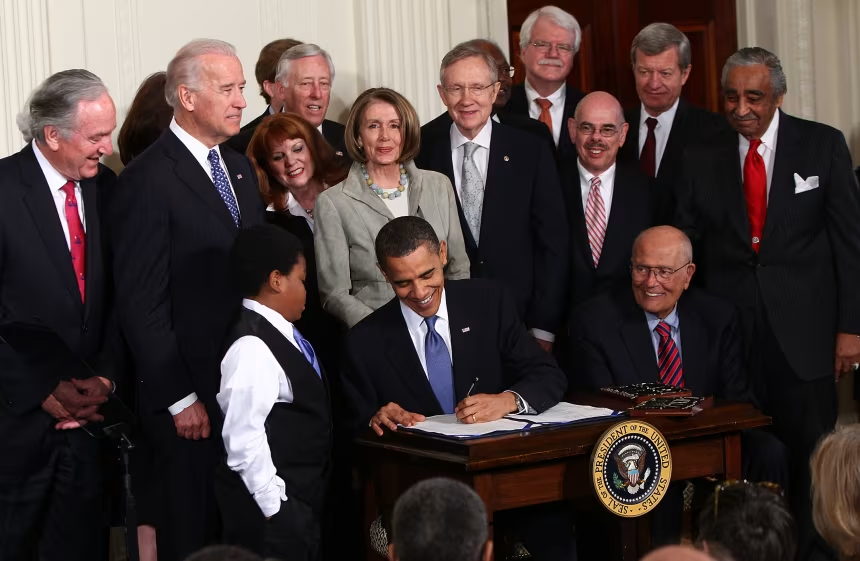
Obamacare has once again become the center of a major national political battle.

Obamacare has once again become the center of a major national political battle.

A true measure of a law’s transformative power is whether it endures — not just on paper, but in the everyday lives of citizens and the heat of political conflict — long after the president who signed it has faded from the political stage. Nation-changing legislation doesn’t simply solve problems in the moment; it reshapes the country’s identity, structure, and future. Its relevance lingers through generations, shaping debates, defining values, and standing as a reminder of the vision — and battles — that brought it into existence.

Take, for instance, the legacy of Franklin D. Roosevelt’s New Deal. Passed during the depths of the Great Depression, it was a bold, expansive response to unprecedented economic collapse. Among its many components, the Social Security Act of 1935 has had the most lasting and visible impact. Nearly 90 years later, Social Security continues to provide financial stability to millions of Americans — from retirees to disabled workers to surviving family members. It has become so embedded in the fabric of American life that any attempt to alter or cut it sparks fierce debate. The program is no longer seen as a temporary fix, but as a foundational promise between government and citizen — one that still defines the social safety net today.

Similarly, the Voting Rights Act of 1965, championed by President Lyndon B. Johnson at the height of the civil rights movement, represents another pivotal moment in American legislative history. Crafted to dismantle systemic barriers that had long prevented Black Americans and other minorities from voting, the law marked a turning point in the nation’s pursuit of racial justice and democratic inclusion. Though key provisions have been weakened in recent years — particularly by Supreme Court rulings that rolled back federal oversight — the law remains a powerful symbol of the fight for equal rights. Six decades after its passage, it continues to spark intense political and legal battles, especially around issues like voter ID laws, gerrymandering, and access to polling places.

Both laws, in their own way, have stood the test of time — not only by remaining in effect, but by continuing to influence the national conversation. They are frequently invoked by politicians, scrutinized in courtrooms, and fiercely defended or opposed depending on the political moment. In doing so, they demonstrate what it means for legislation to outlive its creator and become part of the country’s DNA.

When a law becomes central to the way Americans live — and central to how they fight over what America should be — it moves beyond policy and into history. It becomes a touchstone, a legacy, and sometimes, a battlefield. These laws remind us that the work of shaping a nation doesn’t end when a bill is signed. That’s often when the real struggle begins.

Les tendances technologiques dans les casinos en ligne français : innovations, sécurité et expérience mobile

Le secteur des casinos en ligne en France connaît une évolution rapide sous l’impulsion des avancées technologiques. Ces innovations, liées à la sécurisation des plateformes, à l’amélioration de l’expérience utilisateur, et à la conformité réglementaire, façonnent l’industrie pour répondre aux attentes croissantes des joueurs tout en respectant les cadres législatifs stricts. Dans cet article, nous explorerons en détail les principales tendances qui transforment le paysage des casinos en ligne français, illustrant chaque évolution par des exemples concrets et des données récentes.

Les avancées en intelligence artificielle pour personnaliser l’expérience utilisateur

Les casinos en ligne français intègrent de plus en plus l’intelligence artificielle (IA) pour offrir une expérience plus adaptée à chaque joueur. Grâce aux algorithmes sophistiqués, ils peuvent analyser des volumes importants de données pour répondre précisément aux attentes, tout en optimisant la sécurité et la satisfaction globale.

Utilisation de chatbots pour un support client instantané

Les chatbots alimentés par l’IA permettent aux casinos de fournir un support 24/7, répondant instantanément aux questions courantes des joueurs. Par exemple, certains établissements comme Flambeau Casino ont adopté des chatbots capables de traiter jusqu’à 80% des requêtes sans intervention humaine, réduisant ainsi les délais de réponse et améliorant la satisfaction client.

Analyser le comportement des joueurs pour des recommandations adaptées

En utilisant des techniques de machine learning, les plateformes peuvent étudier le comportement de chaque joueur : préférences, temps passé, montants misés, et jeux favoris. Avec ces données, des systèmes de recommandation proposent des jeux ou des bonus personnalisés, augmentant la probabilité de fidélisation. Selon une étude de l’Observatoire des Jeux, 65% des joueurs français étant satisfaits de recommandations personnalisées, cette stratégie est devenue un levier clé pour les opérateurs.

Prévention de la fraude grâce à l’apprentissage automatique

Les systèmes d’apprentissage automatique détectent en temps réel des comportements suspects ou inhabituels, contribuant à la prévention de la fraude et au blanchiment d’argent. Par exemple, la société française Betclic a déployé des outils capables d’identifier des activités frauduleuses avec un taux de précision supérieur à 90%, renforçant la confiance des joueurs et des régulateurs.

Les technologies de paiement innovantes facilitant les transactions sécurisées

Les méthodes de paiement évoluent rapidement pour garantir rapidité, sécurité et conformité. La digitalisation des transactions contribue également à une meilleure expérience utilisateur, essentielle pour fidéliser la clientèle dans un marché compétitif.

Adoption des portefeuilles électroniques et paiements mobiles

Les portefeuilles électroniques comme PayPal, Apple Pay ou Google Pay se généralisent dans les casinos en ligne français, offrant aux joueurs une expérience de paiement simplifiée et rapide. Selon la Fédération Française des Casinos en Ligne, 70% des transactions effectuées en 2023 se faisaient via ces moyens, notamment sur mobile, pour leur sécurité et leur simplicité d’utilisation.

Implémentation de la blockchain pour une transparence accrue

La blockchain permet de garantir l’intégrité des transactions et des résultats de jeux, en assurant une transparence totale. Des plateformes comme Zegeen Casino ont expérimenté la technologie pour fournir des revues indépendantes, renforçant ainsi la confiance des joueurs dans l’équité des jeux.

Authentification biométrique pour valider les transactions

L’intégration de la biométrie, comme la reconnaissance faciale ou fingerprint, sécurise davantage les opérations financières. Par exemple, certains opérateurs français ont implémenté cette technologie pour valider les dépôts, rendant les transactions quasi instantanées tout en empêchant les accès non autorisés.

Les solutions de sécurité renforcées pour protéger les données des joueurs

La protection des données personnelles et financières est devenue une priorité absolue pour les casinos en ligne français, surtout avec l’entrée en vigueur du RGPD. Des mesures techniques avancées sont donc déployées pour garantir la confidentialité et l’intégrité des informations.

Cryptage avancé des données personnelles et financières

Les plateformes utilisent des protocoles de cryptage de niveau bancaire, tels que TLS 1.3, pour assurer la confidentialité des échanges. Les données sont également stockées dans des environnements sécurisés, utilisant le chiffrement au repos, pour éviter toute fuite ou piratage. Selon une étude récente, 89% des opérateurs français considèrent ces mesures comme essentielles pour leur conformité légale.

Surveillance en temps réel pour détecter les activités suspectes

La mise en place de systèmes de surveillance en continu, basés sur l’analyse comportementale et le machine learning, permet de repérer rapidement des activités inhabituelles. Casino managment Systems (CMS) en France intègrent désormais ces outils, réduisant de 30% le temps de détection des incidents de sécurité.

Conformité aux régulations françaises et européennes

Les opérateurs doivent respecter les exigences de l’Autorité Nationale des Jeux (ANJ) et du RGPD, qui imposent des standards stricts en matière de sécurité et de transparence. Des audits réguliers, réalisés par des organismes indépendants, garantissent la conformité et renforcent la légitimité des plateformes.

Les innovations en expérience mobile pour attirer et fidéliser les joueurs

Les joueurs français privilégient de plus en plus l’utilisation de smartphones pour accéder aux casinos en ligne. La qualité de l’expérience mobile devient donc un différenciateur essentiel dans un marché où la compétition est féroce.

Développement d’applications mobiles avec interfaces intuitives

Les applications conçues par les opérateurs intègrent des interfaces simplifiées, un design épuré et des fonctionnalités intuitives. Par exemple, le groupe PokerStars a investi massivement dans une app mobile native qui offre une navigation fluide et une personnalisation avancée, augmentant leur taux de fidélité de 15% en un an.

Intégration de jeux en réalité augmentée et virtuelle

Certains casinos français innovent en proposant des jeux en réalité augmentée (RA) ou virtuelle (RV). Via leur smartphone ou un casque VR, les joueurs peuvent vivre une expérience immersive, par exemple pour jouer sur une table de roulette 3D ou explorer un environnement de casino virtuel. Ce genre d’innovations permet de séduire une clientèle jeune et technophile.

Optimisation du gameplay pour une utilisation fluide sur smartphones

Les plateformes adaptent leurs jeux et leur interface pour assurer une utilisation optimale sur tous types d’écrans. L’étude de l’Autorité des Jeux (ANJ) révèle que 82% des joueurs français ont renoncé à un site mobile jugé lent ou peu convivial, soulignant l’importance de l’optimisation technique.

Les tendances émergentes en réalité virtuelle et augmentée dans les casinos en ligne

La réalité virtuelle (RV) et la réalité augmentée (RA) offrent des opportunités inédites pour rendre le jeu plus immersif, social et réaliste. Ces innovations apparaissent déjà dans certains casinos en ligne français, apportant une véritable révolution dans l’industrie.

Création d’environnements immersifs pour une expérience réaliste

Les environnements virtuels permettent aux joueurs de se retrouver dans un espace semblable à un véritable casino, avec la possibilité de se déplacer, discuter avec d’autres joueurs et interagir avec les jeux comme dans un établissement physique. Par exemple, Playtech a lancé une plateforme VR accessible depuis PC ou casque VR compatible, augmentant l’engagement global.

Interaction sociale virtuelle pour renforcer l’engagement

Les fonctionnalités sociales, telles que le chat en direct, les avatars personnalisés ou les tables multijoueurs en RA ou RV, encouragent la participation communautaire. La plateforme française Casino Virtuel a intégré ces éléments pour favoriser la fidélisation, notamment lors des événements spéciaux ou tournois en ligne.

Exemples concrets d’intégration dans des plateformes françaises

Plateforme Technologie Utilisée Description
Virtual Casino FR VR (Casque Oculus Rift) Création d’un environnement immersif avec tables de jeu interactives
AugmentPlay RA sur smartphone Jeux de roulette avec réalité augmentée intégrée à l’environnement réel

Les stratégies pour garantir la conformité réglementaire face aux innovations technologiques

Face à l’évolution technologique rapide, la réglementation française, encadrée par l’ANJ, impose aux opérateurs de suivre strictement les évolutions législatives et de mettre en œuvre des solutions conformes pour garantir la sécurité des joueurs. Il est également essentiel que ces opérateurs restent informés des tendances du marché, notamment en ce qui concerne des services comme <a href=”https://rodeoslot-casino.fr”>rodeoslot casino</a>.

Suivi des évolutions législatives françaises en matière de jeux en ligne

Les changements législatifs réguliers, notamment la Loi sur les jeux d’argent en ligne de 2010 révisée en 2020, imposent une veille constante. Des cabinets spécialisés suivent ces modifications pour conseiller les opérateurs et assurer leur conformité.

Adoption de solutions technologiques conformes aux exigences légales

Les nouvelles solutions technologiques, comme les outils de vérification d’identité ou d’authentification biométrique, doivent respecter la législation française. Par exemple, la conformité avec le RGPD impose une gestion rigoureuse des données personnelles, tandis que l’utilisation de la blockchain doit respecter les standards de transparence et d’intégrité.

Audits réguliers et certifications pour assurer la confiance des joueurs

Les opérateurs français réalisent des audits de sécurité et de conformité par des organismes indépendants, comme l’Autorité de Certification, pour certifier leur respect des règles. Ces démarches rassurent les joueurs quant à l’équité et la sécurité des plateformes, stimulant ainsi leur engagement et leur fidélité.

En résumé, l’intégration intelligente de ces nouvelles technologies, associée à une conformité rigoureuse, positionne les casinos en ligne français à la pointe de l’innovation tout en sécurisant la confiance des joueurs. Ces tendances, si elles sont bien encadrées, représentent une véritable opportunité pour l’industrie de continuer à évoluer dans un environnement à la fois sécurisé, immersif et attractif.

Onlayn mərc oyunlarından zövq almağın yolu. Onlayn oyunları pulsuz BetAndreas no deposit bonus sınaqdan keçirin

İnternet vasitəsilə pulsuz kazino sınaq oyunları tələbələrə pulsuz görünüş və hiss ilə birlikdə daxil olur. Demək olar ki, bütün rəqəmsal onlayn kazinolar burada oyun adlarını nümayiş çayında təqdim edir, buna görə də onlar adətən etibarlı pul versiyaları kimidirlər. Continue reading “Onlayn mərc oyunlarından zövq almağın yolu. Onlayn oyunları pulsuz BetAndreas no deposit bonus sınaqdan keçirin”

Evaluating the Pros and Cons of Playing Jackpot Slots vs Regular Slots

How Do Jackpot Slots Influence Player Risk and Reward Expectations?

Analyzing the Potential for Large Payouts versus Steady Winnings

Jackpot slots are renowned for offering the chance to win substantial sums, often reaching into the millions. For example, progressive jackpots like those in Mega Moolah or Major Millions can accumulate over time due to a small percentage of each bet contributing to the jackpot pool, leading to life-changing payouts. This potential contrasts sharply with regular slot machines, which tend to provide smaller, more frequent wins. Regular slots typically have a higher hit frequency, meaning players can enjoy consistent, if modest, winnings.

Research indicates that while the maximum jackpots attract players looking for a big win, the likelihood of hitting these is extremely low—often less than 1 in several million. Conversely, regular slots, with their lower volatility, deliver a steadier but smaller payout structure, aligning with players seeking regular entertainment and reasonable returns.

Impact of Jackpot Size on Player Engagement and Gambling Behavior

The size of jackpots significantly influences gambling behavior. Large jackpots tend to evoke heightened excitement and risk-taking, often leading players to make larger bets in pursuit of the big win. Psychological studies show that the possibility of a monumental payout triggers dopamine release, reinforcing risky gambling habits. For instance, a gambler might increase their stake at a slot machine when a jackpot reaches an eye-catching figure, driven by the hope of a life-changing reward.

Conversely, smaller, more frequent wins from regular slots foster a perception of steady progress and maintain player engagement without the extreme highs and lows associated with big jackpots.

Variability in Win Frequencies Between Jackpot and Regular Slot Machines

Aspect Jackpot Slots Regular Slots
Win Frequency Low; jackpots occur rarely, often once in millions of spins Higher; wins happen more frequently, sometimes several times per hour
Typical Payouts Large, often in the millions Small to moderate, consistent payouts
Player Experience High volatility with potential for thrill or disappointment Lower volatility allows for sustained entertainment

This variability means players choosing jackpot slots accept longer chances of losing streaks in exchange for the chance at a significant payout, whereas regular slots serve players seeking more predictable, smaller outcomes.

What Are the Cost Implications of Playing Jackpot vs Regular Slots?

Betting Requirements and Their Effect on Budget Management

Jackpot slots often have higher minimum bets, especially in progressive machines—sometimes $1 or more per spin—intended to fund the jackpot pool. In contrast, regular slot machines can permit bets as low as a few cents, making them more accessible for casual players or those on a tight budget. The higher stakes on jackpot slots can accelerate losses if a player does not hit the jackpot, requiring careful bankroll management.

For example, a player betting $5 per spin on a jackpot slot doubling their budget accelerates their risk, especially given the low probability of winning the jackpot but high potential loss if luck isn’t on their side.

Long-Term Value: Return to Player (RTP) Differences

The Return to Player (RTP) metric indicates the percentage of wagered money a machine is programmed to pay back over time. Regular slots typically feature RTPs between 94-98%, providing relatively predictable returns. Jackpot slots, especially those with progressive jackpots, often have a lower RTP—sometimes as low as 85-90%—due to the large potential payout absorbing a significant portion of wagers.

This difference means that, over the long term, playing regular slots generally offers better statistical value, though jackpot slots carry the allure of a potential windfall.

Financial Risks Associated with High-Variance Jackpot Games

Playing jackpot machines entails high variance, meaning a player could experience long periods without wins, especially large ones. This variance increases the risk of depleting funds quickly—particularly if players chase the jackpot with larger bets. A field study published in the Journal of Gambling Studies notes that high-variance games are associated with higher gambling-related harm due to the unpredictable nature of wins and losses.

How Do Player Strategies Differ When Approaching Jackpot and Regular Machines?

Optimal Betting Strategies for Maximizing Wins in Both Types

For regular slots, a common strategy involves Bet Sizing: betting the maximum when possible to unlock higher payout tiers or bonus features, while maintaining a manageable bankroll. Conversely, for jackpot slots, players often face the dilemma of balancing between betting enough to qualify for jackpots and conserving funds. Since jackpot odds are fixed and long, some gamblers adopt a strategy of consistent moderate bets, aiming to play long enough to possibly hit the jackpot without risking large losses.

However, research indicates that no betting strategy can influence the odds of jackpot hits, which are purely chance-based. Therefore, prudent bankroll management becomes critical, especially on high-volatility jackpot machines.

Influence of Machine Features on Player Decision-Making

Features such as bonus rounds, multiplier effects, and jackpot thresholds influence player behavior. For instance, jackpots often have threshold multipliers that encourage players to spend more for increased chances of hitting the big prize. Regular slots may have frequent bonus rounds that reward consistent, smaller wins, thus appealing to different gambling motives.

Behavioral Tendencies: Chasing Jackpots vs Consistent Play

Players chasing jackpots often exhibit “chasing behavior,” increasing bets after losses in hopes of hitting the big prize—a pattern associated with greater gambling harm. In contrast, players of regular slots might adopt a steady play approach, emphasizing entertainment over large payouts. According to behavioral analyses in gambling research, understanding these tendencies helps in designing responsible gaming strategies.

What Are the Psychological Impacts of Playing Large-Jackpot versus Regular Slot Games?

Emotional Responses to Near Wins and Big Payouts

The thrill of a near miss on a jackpot, such as the reels stopping just short of the winning combination, generates strong emotional reactions, often inducing a desire to continue playing. Conversely, regular slot wins, though smaller, provide a sense of steady accomplishment. A 2019 study in Psychological Science found that these near misses can simulate the excitement of an actual win, reinforcing gambling behavior even when losses accumulate. If you’re interested in exploring different gaming experiences, you might want to visit http://spinigma-casino.com/ for more information.

Potential for Addiction and Over-Gambling Risks

High-reward gambling games, like jackpot slots, tend to have higher addictive potential due to their high volatility and emotional highs. The intermittent reinforcement schedule—the unpredictability of wins—can foster compulsive gambling. Experts warn that players attempting to chase jackpots risk escalation, leading to financial and psychological harm. Responsible gambling campaigns emphasize understanding the nature of these games to mitigate risks.

Motivational Factors Driving Player Preferences

Players are often motivated by different factors: some seek the adrenaline rush from the possibility of a life-changing jackpot, while others prefer the predictability and entertainment value of regular slots. A survey by the National Council on Problem Gambling highlights that motivation significantly influences gambling choices, with jackpot seekers motivated by the allure of luck and big rewards, and regular slot players motivated by entertainment and steady wins.

“Understanding these motivations helps stakeholders develop better responsible gaming practices and tailor interventions accordingly.”

Что вам нужно знать. Вид бесплатных онлайн-игр в casino olimp kz онлайн-казино.

Бонусы

Бесплатные онлайн-трансляции матчей в букмекерских конторах — это увлекательный способ применить полученные знания и попробовать свои силы в азартных играх, не тратя реальные деньги. В таких играх также можно выиграть реальные денежные призы и доллары. Однако важно понимать, как работают букмекерские конторы, чтобы определить, где могут быть ограничения.